
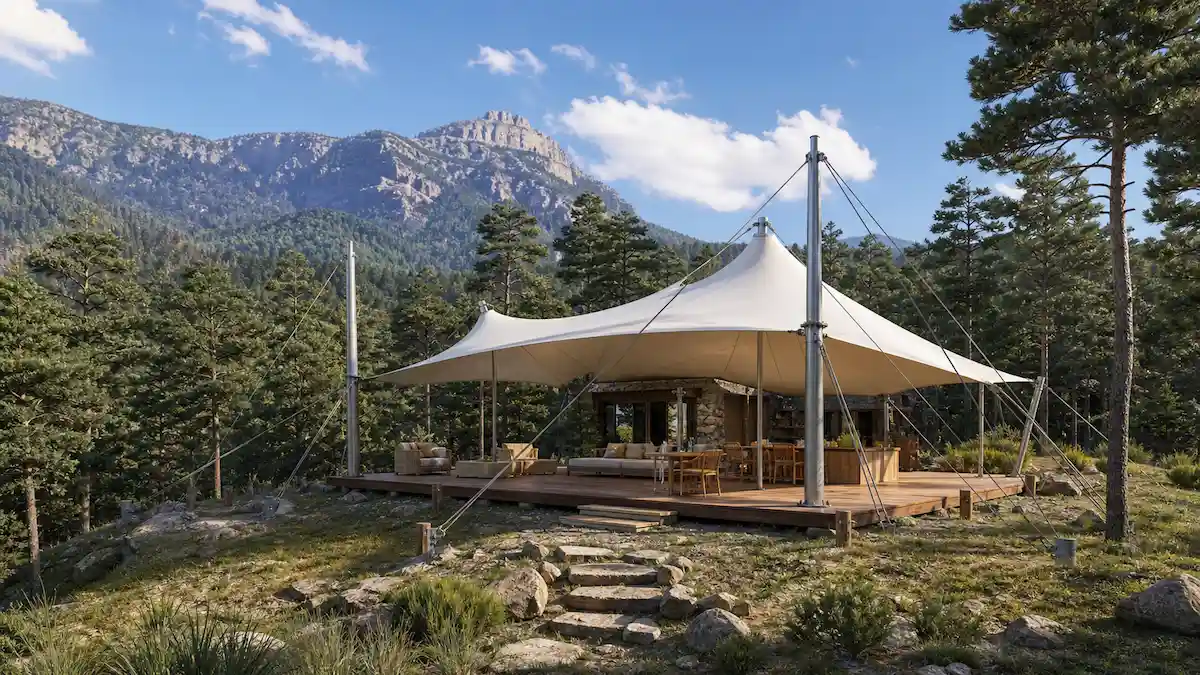
Tensile membrane structures are an excellent choice for wilderness, eco-resort, adventure tourism and remote outdoor projects because they are lightweight, durable, fast to install and visually sensitive to natural surroundings. In places where conventional construction is difficult, expensive or disruptive, tensile membrane systems offer a practical way to create shaded, weather-protected and comfortable spaces.
Whether the site is located in a forest area, hill region, desert landscape, riverside destination, campsite, resort property or remote public space, the structure must respond to access limitations, changing weather, low-impact construction needs and long-term maintenance. This is where tensile membrane architecture performs especially well.
For wilderness projects, the best structure is not only beautiful. It should be lightweight to transport, quick to install, strong against weather, easy to maintain and respectful of the natural site.
At ShadeCo India Private Limited, tensile membrane structures are designed with attention to site conditions, wind load, drainage, membrane quality, steel framework, anchoring and long-term usability. This guide explains why they are a smart solution for wilderness and remote outdoor environments.
What Are Tensile Membrane Structures?
Tensile membrane structures are architectural shade systems made from tensioned fabric membranes supported by steel or aluminum frameworks, cables, masts and anchors. The membrane is stretched into a stable shape and held under controlled tension, allowing it to cover large spaces with fewer supports and less material.
Common membrane materials include PVC-coated polyester, PTFE-coated fiberglass and ETFE film. These materials are selected according to the project’s budget, design life, fire rating, UV exposure, translucency, wind conditions and maintenance requirements.
You can view completed tensile structure projects on our ShadeCo project portfolio.
Why Tensile Membrane Structures Work Well in Wilderness
Wilderness sites often have limited access, uneven terrain, sensitive surroundings and unpredictable weather. Heavy construction can be slow, costly and disruptive. Tensile membrane structures solve many of these challenges because most components can be prefabricated, transported in manageable sections and installed with less on-site disturbance.
- Lightweight system: Fabric membranes and optimized steel frames are easier to transport than heavy conventional roofing materials.
- Fast installation: Prefabricated components reduce site work and help complete projects faster.
- Low site impact: Less excavation and shorter installation time can reduce disturbance to natural surroundings.
- Weather protection: Properly designed membranes provide shade, UV protection and rain protection.
- Flexible design: The structure can be shaped according to terrain, view direction, usage and architectural theme.
This combination makes tensile membrane structures suitable for eco-resorts, nature retreats, outdoor dining areas, viewing decks, amphitheaters, trail shelters, camping facilities, wellness spaces and remote hospitality projects.
Easy Transportation for Remote Sites
Transport is one of the biggest challenges in wilderness construction. Remote locations may have narrow access roads, steep terrain or limited space for heavy machinery. Tensile membrane structures help because the fabric membrane can be folded or rolled, while steel components can be fabricated in sections and transported more efficiently.
This makes them practical for hill resorts, forest camps, desert retreats and remote public spaces where moving concrete, heavy roofing panels or bulky construction material may not be easy.
Quick Installation with Less Site Disturbance
Because tensile membrane structures are planned and fabricated before reaching the site, installation can be faster than many conventional roofing systems. The framework is assembled, the membrane is positioned, and final tensioning is carried out according to the approved design.
- Less on-site fabrication: Many components are prepared in advance.
- Shorter execution time: Faster installation reduces disruption to the property.
- Cleaner work process: Less heavy construction activity helps keep the site organized.
- Better planning: Prefabrication allows more control over quality and dimensions.
For resorts and hospitality properties, this is especially useful because construction work can affect guest experience. A faster installation process helps the project become usable sooner.
Strong Performance in Outdoor Weather
Wilderness structures must handle sun, rain, wind, temperature changes and long outdoor exposure. Tensile membrane structures are designed to perform in these conditions when the membrane, steel framework, anchoring and drainage are properly engineered.
- UV resistance: Quality membranes help reduce harsh sun exposure in outdoor spaces.
- Water drainage: Curved forms and correct slope help rainwater move away from the structure.
- Wind stability: Proper membrane tension and anchoring help the structure resist wind loads.
- Corrosion protection: Steel members can be painted, powder coated or galvanized according to site exposure.
- Long-term durability: Suitable fabric and framework selection supports longer service life.
For any remote outdoor project, structural planning should consider local climate, wind direction, drainage path and maintenance access before finalizing the design.
Natural Light and Comfortable Shade
A major benefit of tensile membrane structures is the quality of light they create. Many membranes soften daylight and reduce glare while still keeping the covered area bright. This is useful for outdoor lounges, dining decks, resort pathways, seating zones and public shelters.
In hot locations, the membrane helps reduce direct sun exposure and improves comfort under the canopy. In scenic locations, the open-sided design allows users to stay connected with the natural view while remaining protected from sun and light rain.
Flexible Design for Uneven Terrain
Wilderness sites rarely have perfectly flat and regular layouts. Tensile membrane structures can be adapted to uneven land, existing landscape elements, site levels and view corridors. Their flexible geometry makes them easier to integrate with natural surroundings compared with many rigid roof forms.
- Conical forms: Suitable for focal points, pavilions and gathering areas.
- Hypar forms: Useful for modern shade structures with dynamic curves.
- Barrel vault forms: Suitable for walkways, dining areas and elongated spaces.
- Cantilever canopies: Useful where one-side support is preferred to keep the covered space open.
The final shape should be chosen according to site function, wind behavior, drainage needs and visual impact. For technical support, explore our structural engineering services.
Sustainable Construction for Sensitive Sites
Wilderness and eco-tourism projects often need structures that provide comfort without overpowering the landscape. Tensile membrane structures support this goal by using lightweight materials, efficient forms and reduced on-site construction activity.
- Lower material use: Lightweight membranes reduce the need for heavy roof materials.
- Daylight advantage: Translucent membranes can reduce daytime dependence on artificial lighting.
- Less site disruption: Faster installation and prefabricated parts reduce prolonged site work.
- Long service value: Durable materials can provide reliable performance with periodic maintenance.
A well-designed tensile membrane structure can improve the usability of a site while maintaining a clean and lightweight architectural presence.
Best Applications in Wilderness Projects
Tensile membrane structures can be used in many types of remote and nature-based developments. Their open character, fast installation and weather protection make them useful for both hospitality and public infrastructure.
- Eco-resort canopies: Outdoor dining, reception areas, poolside lounges and viewing decks.
- Trail and park shelters: Rest areas, shaded seating and visitor information points.
- Adventure tourism facilities: Activity zones, waiting areas and gathering spaces.
- Outdoor event spaces: Amphitheaters, performance zones and temporary gathering areas.
- Remote hospitality structures: Walkway covers, parking shades, outdoor cafes and landscape pavilions.
These applications can be customized according to size, fabric type, color, support layout, site access and long-term maintenance requirement.
Materials Suitable for Wilderness Conditions
Material selection should be based on the local environment. A desert site, hill resort, coastal property or forest retreat may each require a different combination of fabric, steel finish and anchoring system.
- PVC-coated polyester fabric: Practical and cost-effective for many shade structures, canopies and outdoor covers.
- PTFE-coated fiberglass fabric: Premium option for long-life architectural membrane projects.
- ETFE film: Lightweight and translucent, suitable for selected high-performance architectural applications.
- Galvanized or painted steel: Used for permanent support frameworks, depending on corrosion exposure.
- Stainless steel cables and fittings: Useful for exposed connection details and long-term durability.
The right material system improves safety, appearance and service life. It also reduces maintenance issues in locations where frequent repair access may be difficult.
Maintenance in Remote Locations
Remote structures should be easy to inspect and maintain. Tensile membrane systems generally require periodic cleaning, drainage checks, fastener inspection, cable tension review and steel coating inspection.
After heavy rain, strong wind or seasonal weather changes, a quick inspection helps identify fabric tension issues, loose fittings, water accumulation or minor damage. Learn more about our cleaning and maintenance services.
Important Design Considerations
Before installing a tensile membrane structure in a wilderness or remote site, the design team should evaluate both environmental and practical factors.
- Site access: Transport route, unloading space and installation method.
- Wind exposure: Open landscapes and hill areas may need careful wind-load design.
- Drainage: Rainwater flow should be planned to avoid ponding or erosion near foundations.
- Foundation condition: Soil, rock and slope conditions affect anchoring strategy.
- Maintenance access: Cleaning and inspection should be possible after installation.
- User comfort: Shade direction, airflow, glare, view and seating layout should be planned together.
A wilderness structure should feel natural in its setting, but it must still be engineered like a permanent outdoor structure. Design beauty and structural performance should work together.
Frequently Asked Questions
- Why are tensile membrane structures good for wilderness sites? They are lightweight, fast to install, adaptable to terrain and suitable for shaded outdoor spaces with lower site disruption.
- Can tensile structures handle strong wind? Yes, when designed with proper wind-load analysis, membrane tension, steel support and anchoring.
- Are they suitable for eco-resorts? Yes, they are widely used for outdoor dining, lounges, walkways, reception canopies and landscape shade spaces.
- Do they need heavy foundations? Foundation requirements depend on size, wind load, soil condition and support layout, but the roofing system itself is lightweight.
- Can they be customized for natural surroundings? Yes, shape, height, color, fabric type and support layout can be customized according to the site and design intent.
Each site is different, so project-specific design review is important before finalizing the structure, material and installation method.
Conclusion: A Smart Shade Solution for Remote Outdoor Projects
Tensile membrane structures are perfect for wilderness because they combine lightweight construction, strong weather performance, fast installation, low visual weight and design flexibility. They help create comfortable outdoor spaces without the heavy appearance and prolonged site disruption of many conventional construction methods.
If you are planning an eco-resort canopy, outdoor dining cover, remote shelter, viewing deck, walkway shade or custom wilderness structure, contact ShadeCo India for design guidance, quotation and project support.