
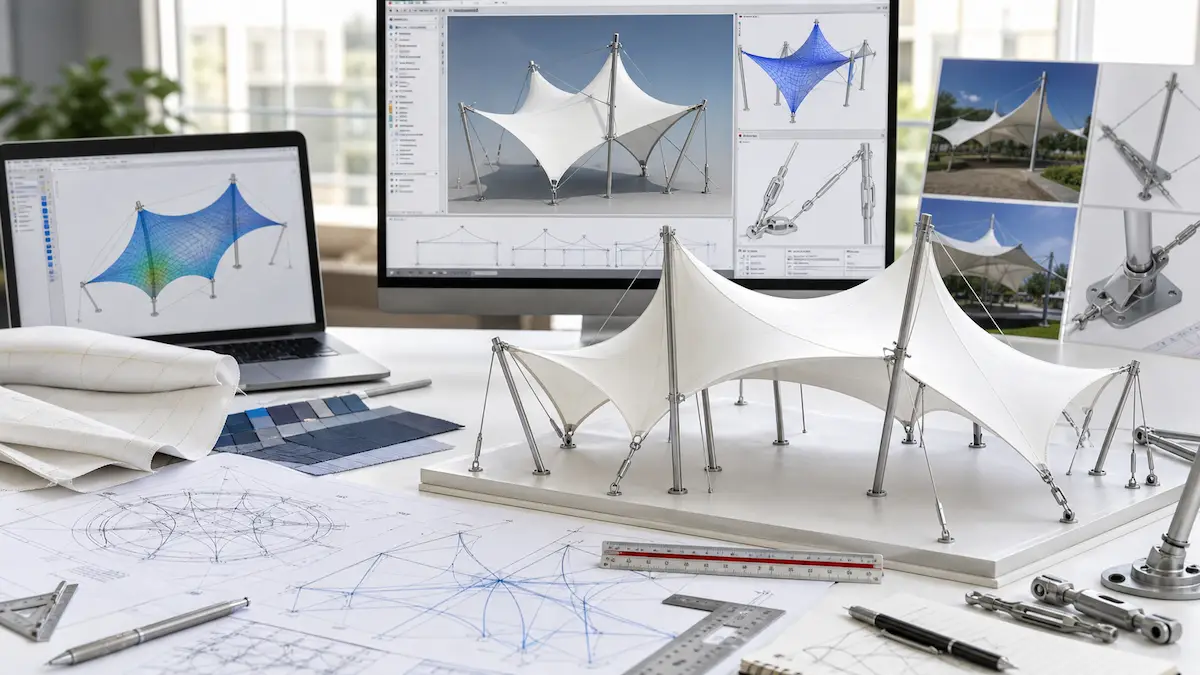
The design process of tensile structures is a careful combination of architecture, structural engineering, material selection, fabrication planning and site execution. Whether the project is a car parking shade, entrance canopy, school walkway cover, shade sail, atrium roof, resort gazebo or custom tensile fabric structure, the success of the final structure depends on how well the design is planned before fabrication begins.
Unlike conventional roofing, tensile structures rely on membrane tension, support geometry, cables, steel framework and anchoring. This means the final shape is not only a visual decision. It directly affects drainage, wind performance, fabric tension, load transfer, installation quality and long-term durability.
A well-designed tensile structure starts with the site, not just the drawing. Wind direction, drainage, span, foundation, fabric behavior and user comfort must be planned together for safe and long-lasting performance.
At ShadeCo India Private Limited, tensile structures are designed for practical use as well as architectural appeal. This guide explains the complete design process followed for modern tensile structure projects, including high-demand applications such as car parking sheds, entrance canopies and large-span shade structures.
Understanding the Project Requirement
Every tensile structure project begins with understanding the purpose of the covered space. A car parking shade needs maximum vehicle protection and easy circulation, while an entrance canopy needs strong visual identity, safe pedestrian movement and proper rainwater drainage. A walkway cover may need modular repetition, and a resort gazebo may need a more premium architectural form.
- Project use: Parking, entrance, walkway, outdoor seating, atrium, playground, resort or public shade.
- Covered area: Approximate size, span, height and required shade coverage.
- User movement: Vehicle movement, pedestrian flow, entry/exit points and usable clearance.
- Design expectation: Simple functional shade or premium architectural tensile structure.
- Budget range: Helps decide fabric type, steel quantity, finishing and structure style.
This first stage helps define whether the project needs a cantilever shade, conical tensile canopy, barrel vault structure, hypar roof, shade sail or custom architectural membrane design.
Site Study and Measurement
A good tensile structure design depends heavily on site conditions. Even a strong concept can fail if the site is not studied properly. Measurements, ground levels, existing buildings, drainage direction, access and foundation conditions must be reviewed before final design.
- Site dimensions: Length, width, available height and obstruction points.
- Existing structures: Walls, columns, buildings, boundary lines and underground utilities.
- Ground condition: Soil, paving, concrete slab, slope and foundation feasibility.
- Water drainage: Rainwater flow, discharge points and slope planning.
- Installation access: Space for material unloading, lifting, assembly and worker movement.
For car parking shade projects, site study is especially important because the structure must protect vehicles without blocking movement, visibility or parking layout efficiency.
Concept Design and Shape Selection
After understanding the requirement and site, the concept design is prepared. This is where the structure shape, support layout, fabric form and architectural character are decided. The shape must look good, but it must also support proper tension, drainage and wind stability.
- Cantilever tensile shade: Popular for car parking sheds, entrance canopies and drop-off areas.
- Conical tensile structure: Suitable for atriums, resorts, courtyards and landmark shade areas.
- Barrel vault structure: Useful for walkways, parking rows and long-span covered passages.
- Hypar tensile structure: A modern saddle-shaped form used for architectural shade applications.
- Shade sail structure: Ideal for playgrounds, terraces, cafes, pool areas and open landscapes.
The right shape is selected based on purpose, site size, appearance, budget and engineering requirement. You can explore completed examples in our ShadeCo project portfolio.
Material Selection for Tensile Structures
Material selection affects the life, appearance, cost and performance of a tensile structure. The fabric membrane, steel framework, cables, fittings and coating system must be selected according to outdoor exposure and project usage.
- PVC-coated polyester fabric: Commonly used for car parking shades, canopies, walkway covers and commercial shade structures.
- PTFE-coated fiberglass fabric: A premium option for long-life architectural tensile structures and large-span membrane roofs.
- ETFE film: Lightweight and translucent, used in advanced architectural applications where daylight transmission is important.
- Mild steel framework: Widely used for permanent tensile structures with suitable paint, powder coating or galvanizing.
- Galvanized steel: Recommended where better corrosion resistance and outdoor durability are required.
- Cables and fittings: Turnbuckles, clamps, plates, anchors and stainless steel hardware help maintain tension and safety.
For Indian outdoor conditions, UV resistance, fire-retardant fabric, water resistance, wind behavior and steel corrosion protection should be considered before finalizing the material system.
Structural Engineering and Load Analysis
The engineering stage checks whether the tensile structure can safely resist wind, rain, self-weight, fabric tension and service conditions. This stage is essential for permanent structures, especially large-span canopies, industrial parking shades, school assembly covers and public-use structures.
- Wind load analysis: Important for open sites, rooftops, parking areas and tall canopies.
- Membrane tension: Ensures the fabric remains stable and does not sag or flutter.
- Steel member sizing: Defines columns, arches, masts, purlins and support members.
- Foundation load: Helps decide base plates, anchor bolts and civil foundation requirements.
- Drainage behavior: Ensures water does not collect on the membrane surface.
Professional engineering helps avoid common issues such as water ponding, fabric wrinkles, weak anchoring, excessive movement and premature wear. Learn more about our structural engineering services.
Form Finding and Membrane Geometry
Form finding is a special step in tensile structure design. Unlike a normal roof, a tensile membrane gets strength from its tensioned shape. The design team must find a stable form that balances aesthetics, fabric tension, drainage and structural performance.
A good membrane form avoids flat surfaces, reduces water collection and distributes forces properly to the supporting framework. This is why many tensile structures use conical, hypar, barrel vault or curved shapes instead of flat fabric panels.
Fabric Patterning and Cutting Details
Once the final 3D membrane shape is approved, it must be converted into accurate 2D fabric cutting patterns. This process is called patterning. It is one of the most important steps because the membrane must fit the structure precisely after fabrication and installation.
- Panel layout: Defines how fabric pieces will be cut and joined.
- Seam planning: Controls welding lines, strength and visual appearance.
- Edge detailing: Includes pockets, cables, clamps, plates and reinforced edges.
- Fabric allowance: Accounts for stretch, tension and installation behavior.
Accurate patterning improves final finishing and reduces on-site adjustment problems. Poor patterning can lead to wrinkles, uneven tension and fitting issues.
Connection and Fitting Design
Connections are the hidden strength of tensile structures. The fabric, cables and steel framework must be connected safely so that loads are transferred smoothly. Bolted plates, turnbuckles, clamps, anchor points and edge cables must be designed according to the expected forces.
- Corner plates: Transfer fabric tension into cables and steel supports.
- Turnbuckles: Help adjust and fine-tune membrane tension.
- Anchor bolts: Secure columns and base plates to the foundation.
- Edge cables: Maintain fabric shape and distribute membrane load.
- Clamps and brackets: Hold fabric and fittings in the correct position.
For car parking shed and entrance canopy projects, connection design must also consider everyday use, vehicle movement, vibration, wind exposure and maintenance access.
Fabrication Planning
After engineering and detailing, fabrication planning begins. Steel components are cut, welded, drilled and finished, while fabric panels are cut, welded and reinforced according to the approved design. Good fabrication planning improves quality and reduces site delays.
- Steel fabrication: Columns, masts, arches, brackets and base plates are prepared.
- Surface treatment: Painting, powder coating or galvanizing is selected according to exposure.
- Fabric welding: Membrane panels are joined and reinforced as per pattern drawings.
- Quality checks: Dimensions, welds, holes, fittings and fabric finish are reviewed before dispatch.
This stage directly affects the final installation speed. If fabrication is accurate, the structure can be assembled and tensioned more smoothly at site.
Installation Planning and Site Execution
Installation planning defines how the structure will be erected safely and efficiently. The sequence usually includes civil foundation readiness, column erection, steel frame assembly, cable fixing, membrane positioning and final tensioning.
- Foundation check: Anchor bolts, base plates and civil work must match approved drawings.
- Frame erection: Steel members are aligned and fixed accurately.
- Membrane placement: Fabric is unfolded carefully to avoid damage.
- Tensioning: Turnbuckles, cables and fittings are adjusted to achieve final shape.
- Final inspection: Drainage, fabric tension, bolt tightening and alignment are checked.
Proper installation ensures the tensile structure performs as intended. Explore our installation services for complete project execution support.
Design Process for Car Parking Shade Structures
Car parking shade is one of the most demanded tensile structure applications because it protects vehicles from sun, heat, rain and outdoor exposure. The design process for car parking sheds focuses on shade coverage, column placement, vehicle movement and long-term durability.
- Parking layout: Single row, double row, cantilever or modular bay planning.
- Clear height: Sufficient clearance for cars, SUVs or commercial vehicles.
- Column location: Positioned to avoid obstruction during parking and movement.
- Fabric slope: Designed for rainwater drainage and shade efficiency.
- Steel finish: Selected according to outdoor exposure and maintenance requirement.
A well-designed tensile car parking shade improves vehicle protection, campus appearance and user comfort. It is widely used in factories, schools, hospitals, malls, housing societies, hotels and office complexes.
Maintenance Planning After Installation
The design process should also consider maintenance. Tensile structures need periodic cleaning, drainage checks, fabric inspection, cable tension review and steel coating inspection. Planning maintenance access during design makes future care easier.
After heavy rain, strong wind or site activity, inspection is recommended to identify loose fittings, water accumulation, fabric damage or corrosion signs. Learn more about our cleaning and maintenance services.
Common Mistakes to Avoid in Tensile Structure Design
Many performance problems can be avoided if the design stage is handled carefully. The most common mistakes include poor drainage, insufficient tension, weak anchoring, wrong fabric selection and ignoring site-specific wind exposure.
- Flat membrane surfaces: Increase the risk of water ponding.
- Wrong column placement: Can obstruct parking, walking or site usage.
- Low-quality fittings: May affect safety and long-term tension stability.
- No maintenance planning: Makes future cleaning and repair difficult.
- Ignoring site conditions: Can lead to design mismatch and installation challenges.
A tensile structure may look simple from outside, but its performance depends on engineering accuracy. This is why professional design, fabrication and installation are important.
Conclusion: A Good Tensile Structure Starts with Good Design
The design process of tensile structures is a complete journey from concept to installation. It includes site study, shape selection, material choice, structural analysis, form finding, fabric patterning, fitting design, fabrication and final tensioning. Every step affects the safety, appearance and life of the structure.
If you are planning a tensile canopy, car parking shade, walkway cover, entrance structure, shade sail or custom architectural fabric structure, contact ShadeCo India for design guidance, quotation and complete project support.