
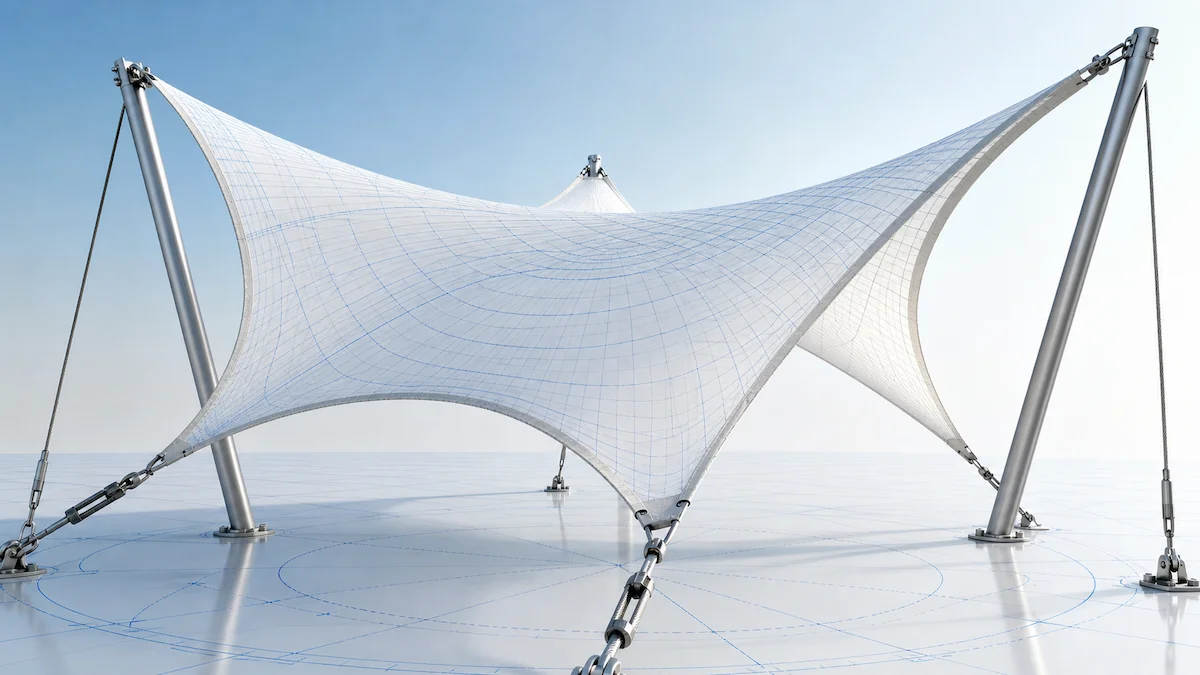
The behavior of tensile fabric structures is different from conventional roofing systems because these structures do not depend only on weight, stiffness or compression. Instead, they use controlled membrane tension, cable forces, double curvature, support geometry and anchoring to create a lightweight yet stable architectural system.
This is why tensile fabric structures can create large-span canopies, atrium roofs, parking shades, walkway covers, stadium roofs, resort gazebos and public shade structures with less material and a more flexible architectural form. Their performance depends on how the fabric, steel framework, cables, fittings and foundations work together under wind, rain, self-weight and service loads.
A tensile fabric structure performs well only when shape, tension, fabric strength, wind-load design, drainage and anchoring are planned together. The final geometry is not just for appearance; it is part of the structural behavior.
At ShadeCo India Private Limited, every tensile structure is designed with attention to site conditions, membrane behavior, steel support layout, connection details and long-term maintenance. This guide explains how tensile fabric structures behave and why their shape, material and engineering matter.
What Are Tensile Fabric Structures?
Tensile fabric structures are architectural systems made from tensioned fabric membranes supported by steel or aluminum frameworks, cables, masts, anchors and connection fittings. The membrane may be made from PVC-coated polyester, PTFE-coated fiberglass, ETFE film or other architectural fabrics depending on the project requirement.
These structures are commonly used as entrance canopies, car parking shades, walkway covers, atrium roofs, outdoor cafe canopies, school assembly covers, industrial parking shades and resort shade structures. You can view practical examples in our ShadeCo project portfolio.
How Do Tensile Fabric Structures Behave?
Tensile fabric structures behave through tension. When the membrane is stretched between supports, it becomes stable and begins to resist loads through its shape. The fabric is flexible by itself, but when correctly tensioned and curved, it can transfer forces efficiently to cables, steel members and foundations.
This behavior is called non-linear because the structure's stiffness and response change as load is applied. A tensile membrane does not behave like a rigid slab. It can slightly deform, redistribute forces and maintain stability through tension, provided the structure has been designed correctly.
- Membrane tension: Keeps the fabric stable and prevents excessive sagging or fluttering.
- Double curvature: Helps the membrane resist wind and rain loads more effectively.
- Cable support: Transfers membrane forces to masts, frames and anchors.
- Steel framework: Carries loads from the membrane system to the foundations.
- Anchoring: Resists uplift, lateral forces and overall movement.
In simple terms, a tensile structure becomes strong because all parts remain in balance. The membrane pulls, the cables hold tension, the steel framework resists force and the anchors keep the entire system fixed safely to the ground or supporting structure.
Why Shape Is Important in Tensile Fabric Structures
The curved shape of a tensile fabric structure is not only for design appeal. It is a key part of structural stability. A flat fabric surface can sag, flap or collect water. A properly tensioned curved surface distributes forces more evenly and reduces the risk of water ponding.
Many tensile structures use anticlastic double curvature, where the fabric curves in opposite directions. This saddle-like behavior helps balance tension forces and improves stability under wind and rain.
- Conical Shape: Uses a high point or central mast to create slope, drainage and strong visual identity.
- Hypar Shape: Uses opposite high and low points to create a saddle form with strong tension behavior.
- Barrel Vault Shape: Uses a curved arch-like form, often suitable for walkways, parking areas and long-span covers.
- Cantilever Shape: Projects from one side and is commonly used for entrances, drop-off canopies and parking shades.
The right shape depends on the purpose of the structure. For example, a school entrance canopy may need a bold visual identity and smooth drainage, while a car parking shade may need repeated modules, maximum coverage and practical installation.
Load Transfer in Tensile Fabric Structures
Load transfer is the path through which forces move from the membrane to the supporting structure. In a tensile structure, loads from wind, rain, membrane self-weight and movement are transferred through fabric tension, edge cables, clamps, steel frames and anchor points.
If load transfer is not planned correctly, the structure may face fabric wrinkles, water accumulation, uneven tension, loose fittings or excessive movement. This is why professional design and installation are essential for permanent tensile fabric structures.
For technical project support, explore our structural engineering services.
Materials and Their Behavior
The material used in a tensile fabric structure affects strength, flexibility, life, fire performance, translucency, UV resistance and maintenance. Each membrane behaves differently under tension, temperature change and long-term outdoor exposure.
- PVC-Coated Polyester Fabric: Flexible, cost-effective and widely used for canopies, parking shades, walkways and commercial shade structures.
- PTFE-Coated Fiberglass Fabric: More premium and durable, with strong heat resistance, UV stability and long-term performance.
- ETFE Film: Lightweight and highly translucent, often used in advanced architectural applications where natural light is important.
- Silicone-Coated Glass Fabric: Offers good flexibility and weather performance for selected architectural applications.
- Steel Framework: Provides strength and load transfer for permanent and large-span structures.
- Cables and Fittings: Maintain membrane tension and connect the fabric safely to the supporting system.
For Indian outdoor conditions, UV resistance, fire-retardant properties, water drainage, corrosion protection and maintenance access should be considered before finalizing the material. A premium membrane alone is not enough; it must be matched with the right framework and fittings.
Design Process of Tensile Fabric Structures
Designing a tensile fabric structure requires a different process from conventional roofing. Because the membrane shape and tension behavior are connected, the design must consider geometry, load, material and installation together.
- Form Finding: Determines the most stable and practical membrane shape for the selected supports and site conditions.
- Load Analysis: Checks how the structure behaves under wind, rain, self-weight and other expected loads.
- Membrane Patterning: Converts the 3D membrane surface into accurate 2D fabric cutting patterns.
- Connection Design: Defines clamps, plates, cables, anchors and support details.
- Installation Planning: Ensures proper sequence for frame erection, fabric placement and final tensioning.
This design process helps avoid practical problems at site. A well-prepared design gives the fabrication team clear dimensions, helps the installation team understand tensioning sequence and gives the client a more reliable final structure.
Common Behavior Issues to Avoid
A well-designed tensile structure performs smoothly, but poor planning can create long-term problems. These issues are usually connected to shape, tension, drainage or connection details.
- Water Ponding: Happens when slope or tension is insufficient and rainwater collects on the membrane.
- Fabric Flutter: Occurs when the membrane is not tensioned properly or wind behavior is not considered.
- Uneven Wrinkles: Can appear due to poor patterning, incorrect tensioning or inaccurate frame geometry.
- Connection Stress: May occur when loads are not distributed properly through plates, cables and anchors.
- Corrosion Risk: Can affect steel and fittings if protective coating is not suitable for the environment.
Most of these issues can be reduced at the design stage itself. Correct slope, proper pretension, suitable fabric, strong anchors and periodic inspection make a major difference in the long-term behavior of tensile fabric structures.
Regular inspection and timely maintenance help avoid many of these problems. Learn more about our cleaning and maintenance services.
Advantages of Tensile Fabric Structures
The behavior of tensile fabric structures creates several advantages for modern construction and shade architecture.
- Lightweight Construction: Uses less material compared with many conventional roofing systems.
- Large Span Coverage: Covers open areas with fewer internal supports.
- Architectural Flexibility: Allows curved, conical, hypar, barrel and custom shapes.
- Weather Protection: Provides shade, UV protection and rain protection when designed properly.
- Energy Efficiency: Some membranes allow controlled daylight, reducing dependence on artificial lighting in covered spaces.
- Fast Installation: Prefabricated components can reduce on-site execution time.
- Long-Term Value: Quality fabric, steel and maintenance can deliver reliable performance over time.
These advantages make tensile structures suitable for schools, hospitals, factories, malls, resorts, residential spaces and public infrastructure. The key is to select the right design according to the site, not just the most attractive shape.
Future of Tensile Fabric Structures
The future of tensile fabric structures is linked to better materials, improved coatings, advanced engineering software and more sustainable construction methods. Self-cleaning membranes, improved UV resistance, recyclable materials and smarter form-finding tools are making tensile architecture more practical for long-term projects.
As architects and developers look for lightweight, energy-efficient and visually distinctive structures, tensile fabric systems will continue to grow in schools, hospitals, commercial buildings, resorts, transport facilities and public spaces.
Frequently Asked Questions
- What is non-linear behavior in tensile fabric structures? It means the structure's shape, stiffness and force distribution change as loads are applied, unlike rigid conventional roofs.
- Why do tensile structures need curved shapes? Curvature improves stability, distributes tension and helps prevent sagging or water accumulation.
- Are tensile fabric structures safe in wind? Yes, when designed with proper wind-load analysis, membrane tension, steel support and anchoring.
- Which fabric is best for tensile structures? It depends on budget, design life, fire rating, UV exposure and project type. PVC, PTFE and ETFE are common options.
- Do tensile fabric structures need maintenance? Yes, periodic cleaning and inspection help maintain fabric tension, drainage, fittings and steel condition.
These FAQs cover the basics, but each project has its own behavior depending on size, shape, location and usage. For permanent structures, technical review and proper installation are always recommended.
Conclusion: Why Understanding Behavior Matters
Understanding the behavior of tensile fabric structures is essential before planning any permanent shade or architectural membrane project. Their strength comes from the relationship between form, tension, material and support system. When these elements are designed correctly, tensile structures deliver excellent performance, modern appearance and long-term value.
If you are planning a tensile fabric canopy, parking shade, atrium roof, walkway cover or custom architectural shade structure, contact ShadeCo India for design guidance, quotation and project support.