
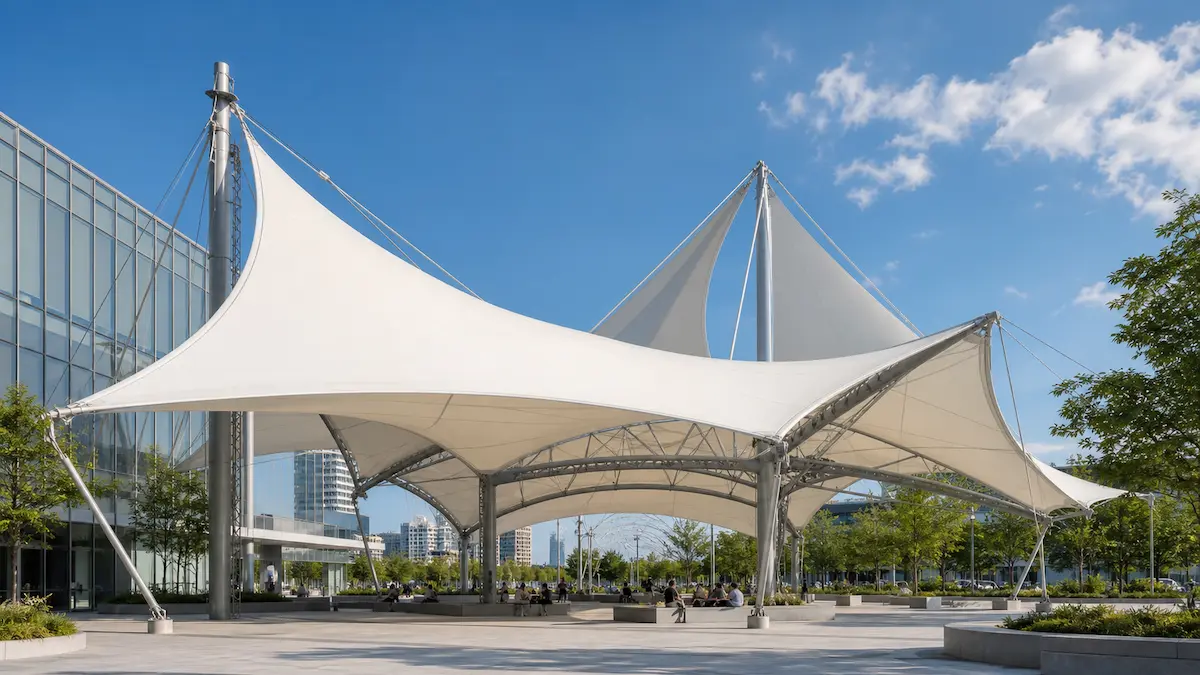
Tensile structures have become one of the most effective solutions in modern architecture for creating lightweight, durable and visually striking covered spaces. From entrance canopies and car parking shades to atrium roofs, stadium covers, walkway shelters and resort shade structures, tensile architecture combines engineering performance with design flexibility.
Unlike conventional roofing systems that depend mainly on heavy compression-based materials, tensile structures use fabric membranes, cables, steel frameworks and controlled tension to achieve strength, stability and elegant forms. This makes them suitable for commercial, institutional, industrial, hospitality and public infrastructure projects where shade, weather protection and architectural appeal are equally important.
Choosing the right tensile structure partner is crucial. Focus on engineering experience, fabric quality, wind-load planning, drainage design, installation process and maintenance support to ensure a safe, durable and visually impressive shade structure.
At ShadeCo India Private Limited, tensile structures are designed with attention to site conditions, usage, wind load, drainage, fabric selection, steel framework and long-term maintenance. This guide explains the key properties, common types and major advantages of tensile structures for modern projects.
What Are Tensile Structures?
Tensile structures are architectural systems that remain stable through tension. A flexible membrane is stretched over or between supporting elements such as steel masts, arches, cables, rings or frames. Once tensioned correctly, the fabric and support system work together to resist wind, rain and regular outdoor exposure.
These structures are widely used where large shaded areas are required without heavy roofing. They can be designed as permanent structures for schools, hospitals, hotels, factories and malls, or as semi-permanent and temporary solutions for events, exhibitions and outdoor seating areas.
If you are planning a project that needs technical design support, explore our structural engineering services for shade and tensile structure projects.
Key Properties of Tensile Structures
The performance of a tensile structure depends on its design, membrane quality, steel framework, anchoring system and installation accuracy. Some of the most important properties include:
- Lightweight Construction: Tensile membranes are much lighter than conventional roofing materials. This reduces structural load and can help simplify foundation and support requirements.
- Large Span Coverage: Tensile systems can cover wide areas with fewer intermediate supports, making them useful for parking areas, assembly zones, walkways, sports areas and public spaces.
- Design Flexibility: Fabric membranes can be shaped into conical, barrel vault, hypar, cantilever, arch and custom architectural forms.
- Weather Protection: Good quality tensile fabrics provide shade, UV protection and rain protection when designed with proper slope, drainage and tensioning.
- High Strength-to-Weight Ratio: The combination of tensioned membrane, steel framework and cables creates a strong yet lightweight roofing system.
- Natural Light Diffusion: Some membranes allow filtered daylight, reducing harsh glare while keeping the covered area bright and comfortable.
- Low Maintenance: With periodic cleaning and inspection, tensile structures can deliver reliable long-term performance.
Common Types of Tensile Structures
Tensile structures can be customized according to site layout, architectural style and functional requirement. The most common types include:
- Conical Tensile Structures: These use a high central point or mast to create a cone-like form. They are popular for entrances, atriums, resorts, courtyards and outdoor seating areas.
- Barrel Vault Structures: These curved structures are suitable for walkways, corridors, parking areas and long-span covered passages.
- Hypar Tensile Structures: Hyperbolic paraboloid forms provide a modern architectural look and good structural stability through double curvature.
- Cantilever Tensile Canopies: These structures are supported from one side and are commonly used for entrances, drop-off areas, school gates, commercial fronts and parking shades.
- Arch Supported Structures: Steel arches support the membrane and create strong, clean forms for parking, industrial and public spaces.
- Shade Sail Structures: These use tensioned fabric panels to create practical shade for playgrounds, terraces, cafes, pool areas and outdoor spaces.
- Custom Architectural Fabric Structures: These are designed for unique project requirements where visual identity and performance both matter.
You can view real completed work on our project portfolio, including tensile canopies, atrium roofs, parking shades and architectural fabric shade structures.
Materials Used in Tensile Structures
Material selection plays a major role in the life, safety and appearance of a tensile structure. The right combination of membrane, steel framework, cables and fittings ensures better performance in outdoor conditions.
- PVC-Coated Polyester Fabric: A popular membrane option for canopies, parking shades, walkways and commercial shade structures because it offers good flexibility, weather resistance and cost efficiency.
- PTFE-Coated Fiberglass Fabric: A premium membrane option known for durability, fire resistance, UV stability and long service life, often used in architectural and large-span projects.
- Architectural Tensile Membranes: Selected based on project requirement, translucency, fire rating, color, coating, tensile strength and expected exposure conditions.
- Galvanized or Mild Steel Framework: Used for masts, arches, columns and support frames. The steel structure is designed according to load, span, site condition and project usage.
- Stainless Steel or Galvanized Cables: Used for tensioning, edge support and load transfer in many tensile fabric systems.
- Anchors, Clamps and Connection Fittings: These components help secure the membrane and framework safely, making them important for long-term stability.
- Protective Coatings and Paint Finishes: Steel members may be painted, powder coated or hot-dip galvanized depending on site exposure, budget and durability requirement.
For outdoor Indian conditions, factors such as UV resistance, fire retardancy, water resistance, wind performance, color stability and maintenance requirements should be considered before finalizing the fabric and steel finish.
Advantages of Tensile Structures
Tensile structures are popular because they offer both functional and architectural benefits. Some major advantages are:
- Modern Appearance: Tensile structures create a premium architectural look that can improve the identity of schools, commercial buildings, hotels, factories and public spaces.
- Efficient Shade Coverage: They provide comfortable shaded areas for vehicles, students, visitors, staff, customers and outdoor users.
- Faster Installation: Prefabricated steel components and membrane panels can often be installed faster than many conventional roofing systems.
- Reduced Structural Weight: Lightweight fabric roofing reduces dead load compared with heavy roofing alternatives.
- Customizable Design: Shape, size, color, fabric type, steel finish and support layout can be customized according to project needs.
- Better Outdoor Usability: Covered spaces become more usable during sun, light rain and general outdoor conditions.
- Long-Term Value: With correct design and maintenance, tensile structures can provide durable performance with a strong visual impact.
Applications of Tensile Structures
Tensile structures are suitable for a wide range of applications because they can be adapted to different site conditions and architectural requirements.
- Educational Institutions: Entrance canopies, assembly area covers, walkway roofs, playground shades and parking areas.
- Hospitals and Healthcare Buildings: Atrium roofs, entrance covers, patient drop-off areas and shaded waiting zones.
- Commercial Spaces: Mall entrances, retail walkways, outdoor cafes, atriums and customer waiting areas.
- Industrial Sites: Vehicle parking shades, loading area covers, worker rest areas and factory campus shade structures.
- Hotels and Resorts: Poolside shades, outdoor dining covers, gazebos, event spaces and premium landscape structures.
- Public Infrastructure: Bus shelters, public walkways, smart city structures, amphitheaters and civic shade spaces.
- Residential Projects: Terrace canopies, garden gazebos, car parking shades and outdoor seating covers.
Design and Engineering Considerations
A tensile structure should not be selected only by appearance. Proper engineering is essential for safety and long-term use. Important considerations include wind load, drainage slope, membrane tension, steel member size, connection details, foundation condition, fabric behavior, access for installation and maintenance planning.
For projects such as school canopies, hospital atrium roofs, industrial parking shades or large-span public structures, a professional design and installation team can help avoid common issues such as water accumulation, poor tensioning, weak anchoring or premature fabric wear.
ShadeCo provides complete support from planning to installation. Learn more about our installation services and cleaning and maintenance services.
Maintenance Requirements
Tensile structures require periodic maintenance to keep them safe and visually clean. Basic maintenance includes fabric cleaning, checking drainage outlets, inspecting steel coating, reviewing fasteners, checking cable tension and removing debris from the membrane surface.
After heavy rain, strong winds or unusual site activity, inspection is recommended to ensure that the membrane, steel framework and anchors remain in good condition.
Why Choose Tensile Structures for Modern Projects?
Tensile structures offer a strong combination of design freedom, lightweight construction, weather protection and long-term usability. They are ideal for projects where a conventional roof may look too heavy, take more time to construct or fail to deliver the desired architectural character.
Whether you need a school entrance canopy, a car parking shade, an atrium roof, a resort gazebo or a custom architectural fabric structure, a well-designed tensile solution can improve both function and appearance.
To discuss your tensile structure requirement, contact ShadeCo India for design guidance, quotation and project support.