
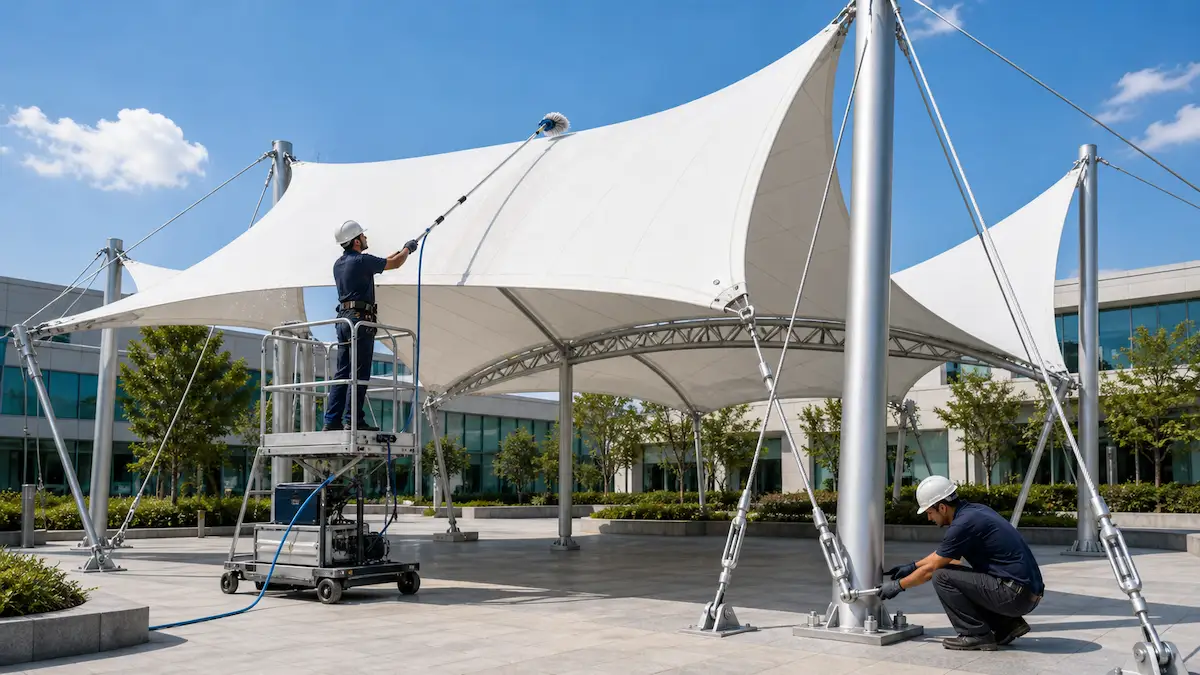
Tensile fabric structures are designed to provide long-term shade, weather protection and architectural appeal. However, like any outdoor structure, they need regular maintenance to stay safe, clean and durable. Proper care helps extend the life of the fabric membrane, steel framework, cables, fittings and anchoring system.
Whether it is a car parking shade, entrance canopy, walkway cover, shade sail, atrium roof, outdoor cafe canopy, gazebo or large architectural tensile structure, maintenance should never be ignored. Dust, rainwater, leaves, bird droppings, loose fittings, corrosion and fabric tension issues can slowly affect performance if not checked on time.
Regular inspection and gentle cleaning are the simplest ways to increase the life of tensile fabric structures. Small issues like loose bolts, blocked drainage or minor fabric damage should be fixed before they become costly repairs.
At ShadeCo India Private Limited, we recommend planned maintenance for all tensile structures, especially those exposed to harsh sunlight, heavy rain, dust, industrial pollution, coastal moisture or high wind conditions. This guide explains practical maintenance tips for long-lasting tensile fabric structures.
Why Maintenance Matters for Tensile Fabric Structures
A tensile structure works through the balance of membrane tension, steel support, cables and anchor points. If any one part becomes weak, loose or dirty, the structure may lose performance over time. Maintenance helps preserve the original shape, fabric strength and visual appearance.
- Improves service life: Regular care helps fabric and steel components last longer.
- Maintains appearance: Cleaning removes stains, dust, bird droppings and organic buildup.
- Protects safety: Inspection helps identify loose fittings, damaged fabric or corrosion early.
- Prevents water ponding: Drainage checks reduce the risk of rainwater accumulation.
- Reduces repair cost: Small repairs are easier and less expensive than major restoration work.
For commercial and institutional spaces, a clean tensile canopy also improves the overall impression of the property. A stained or sagging shade structure can make even a premium building look poorly maintained.
Schedule Regular Structure Inspections
Inspection is the first step in tensile structure maintenance. The structure should be checked at least twice a year and after heavy rain, strong wind, storms or unusual site activity. High-traffic locations such as schools, hospitals, malls, factories and public spaces should be inspected more frequently.
- Fabric surface: Look for tears, punctures, scratches, abrasion, stains or loose areas.
- Membrane tension: Check whether the fabric is sagging, wrinkled or fluttering in wind.
- Cables and turnbuckles: Inspect for looseness, corrosion, damage or missing hardware.
- Bolts and clamps: Ensure all fasteners are tight and properly aligned.
- Steel framework: Check masts, columns, arches and brackets for rust, cracks or coating damage.
- Anchors and base plates: Review foundation connection, anchor bolts and base plate condition.
Inspection records should be maintained, especially for large-span tensile roofs, car parking sheds and public-use canopies. This helps track recurring issues and plan preventive maintenance.
Clean the Fabric Membrane Properly
Cleaning keeps the tensile fabric looking fresh and prevents dirt buildup. However, cleaning should be done gently because harsh chemicals, hard brushes or abrasive tools can damage fabric coatings.
- Use mild soap and water: Avoid strong solvents, bleach or harsh industrial cleaners unless approved for the membrane type.
- Use soft brushes or cloth: Hard scrubbing can damage protective coatings.
- Remove debris early: Leaves, dust and bird droppings should not be left for long periods.
- Rinse thoroughly: Soap residue should be washed away after cleaning.
- Avoid pressure damage: High-pressure water should be used carefully and only when suitable for the fabric.
For shade sails, parking shades and canopies near trees, cleaning may be required more often because leaves, pollen and organic matter can collect on the fabric surface.
Prevent Water Ponding and Drainage Problems
Water ponding is one of the most common problems in poorly maintained tensile structures. It happens when rainwater collects on the membrane due to blocked drainage, sagging fabric, wrong slope or loss of tension.
- Check drainage paths: Ensure rainwater flows away from the membrane properly.
- Remove debris: Leaves and dirt can block drainage zones and create water accumulation.
- Review fabric tension: Loose membrane can create low points where water collects.
- Inspect after rainfall: Look for any area where water stays longer than normal.
- Repair sagging early: Tension adjustment may be needed if fabric shape has changed.
Proper drainage protects the fabric, steel frame and users below the structure. If water ponding is repeated, a professional inspection is recommended.
Inspect Steel Framework and Coatings
The steel framework supports the tensile membrane and transfers load to the foundation. Rust, coating damage or loose connections can affect the structure’s life and safety. Steel inspection is especially important for outdoor, coastal and industrial locations.
- Check for rust: Inspect columns, masts, arches, brackets and base plates.
- Review coating condition: Look for scratches, peeling paint or exposed metal.
- Touch-up damaged areas: Small coating damage should be treated before corrosion spreads.
- Check welded joints: Look for cracks, corrosion or movement.
- Inspect base plates: Make sure water is not collecting around the foundation connection.
For long-lasting performance, steel members may require repainting, coating repair or corrosion treatment depending on site exposure and age of the structure.
Check Cables, Turnbuckles and Fittings
Cables and fittings help maintain the shape and tension of tensile fabric structures. If they become loose, corroded or damaged, the membrane may sag or move excessively in wind.
- Inspect edge cables: Check for corrosion, fraying or looseness.
- Review turnbuckles: Make sure adjustment fittings are secure and not damaged.
- Check clamps and plates: Ensure fabric edges are held properly.
- Inspect anchor points: Look for movement, cracks or loose bolts.
- Confirm alignment: Misaligned fittings can create uneven tension in the fabric.
A small fitting issue can affect the entire membrane. This is why cable and hardware inspection should be part of every maintenance routine.
Repair Small Fabric Damage Quickly
Minor fabric damage should never be ignored. Small cuts, punctures or worn areas can grow larger due to wind movement, rainwater and tension forces. Early repair can prevent expensive replacement later.
- Patch small tears: Use compatible fabric repair material and proper technique.
- Avoid temporary tape fixes: Incorrect patching can fail quickly outdoors.
- Check nearby tension: Fabric damage may indicate stress concentration or loose fittings.
- Call professionals: Large tears, seam failures or structural concerns should be handled by trained technicians.
For older structures, a repair assessment can help decide whether patching, re-tensioning, partial fabric replacement or full membrane replacement is the best option.
Maintenance Tips for Car Parking Shades
Car parking shades are exposed to sunlight, dust, rain, vehicle movement and outdoor pollution every day. Regular care keeps them functional and improves the appearance of the parking area.
- Clean fabric regularly: Remove dust, stains and bird droppings from the membrane.
- Check vehicle clearance: Ensure no part of the structure is damaged by vehicle movement.
- Inspect columns: Look for dents, corrosion or impact damage near parking bays.
- Review drainage: Avoid water dripping directly onto vehicles or walkways.
- Check bolts and anchors: Vehicle vibration and site activity can affect fittings over time.
A clean and well-maintained car parking shade protects vehicles better and improves the overall impression of factories, schools, hospitals, hotels, offices and housing societies.
Seasonal Maintenance Checklist
Seasonal inspection helps prepare tensile structures for changing weather conditions. Before monsoon, summer or winter, the structure should be checked for common weather-related risks.
- Before monsoon: Check drainage, fabric tension, anchor bolts and water discharge points.
- Before summer: Clean dust buildup and inspect UV-exposed fabric areas.
- After storms: Inspect cables, fittings, membrane edges and steel supports.
- After heavy rain: Check for water ponding, leakage, staining or sagging.
- Annual review: Schedule a detailed inspection for large or public-use structures.
Seasonal care is especially important in India because many sites face strong sunlight, dust, heavy rainfall and sudden wind events during the year.
When to Call a Professional Maintenance Team
Basic cleaning can be handled by trained site staff, but structural inspection and repair should be done by professionals when there is visible damage, sagging, corrosion, loose anchors or repeated water accumulation.
- Fabric is sagging or wrinkled: May require re-tensioning or pattern review.
- There is water ponding: Drainage or tension correction may be needed.
- Steel is rusting: Coating repair or corrosion treatment may be required.
- Fittings are loose: Hardware inspection and tightening should be done safely.
- Fabric is torn: Professional patching or replacement may be required.
ShadeCo provides support for inspection, cleaning, repair and maintenance of tensile structures. Explore our cleaning and maintenance services and roof repair services.
Frequently Asked Questions
- How often should tensile fabric structures be inspected? At least twice a year and after heavy rain, strong wind or storm conditions.
- Can tensile fabric be cleaned with pressure washing? It depends on fabric type and pressure level. Gentle cleaning with mild soap and soft tools is usually safer.
- What causes water ponding on tensile membranes? Poor slope, loose fabric tension, blocked drainage or structural movement can cause water accumulation.
- Can small tears in tensile fabric be repaired? Yes, minor damage can often be patched with compatible materials if repaired early.
- Do car parking shades need maintenance? Yes, fabric cleaning, column inspection, drainage checks and anchor review are important for long-term performance.
Maintenance needs may vary based on location, structure type, fabric quality and exposure conditions. A professional inspection can help create the right maintenance schedule.
Conclusion: Maintenance Protects Your Investment
Tensile fabric structures are durable and efficient, but regular maintenance is essential for long-lasting performance. Routine inspection, gentle cleaning, drainage checks, cable review, steel coating care and timely repairs can prevent major problems and extend the life of the structure.
If you need help with tensile structure cleaning, car parking shade maintenance, canopy repair, shade sail inspection or fabric roof repair, contact ShadeCo India for professional support.