
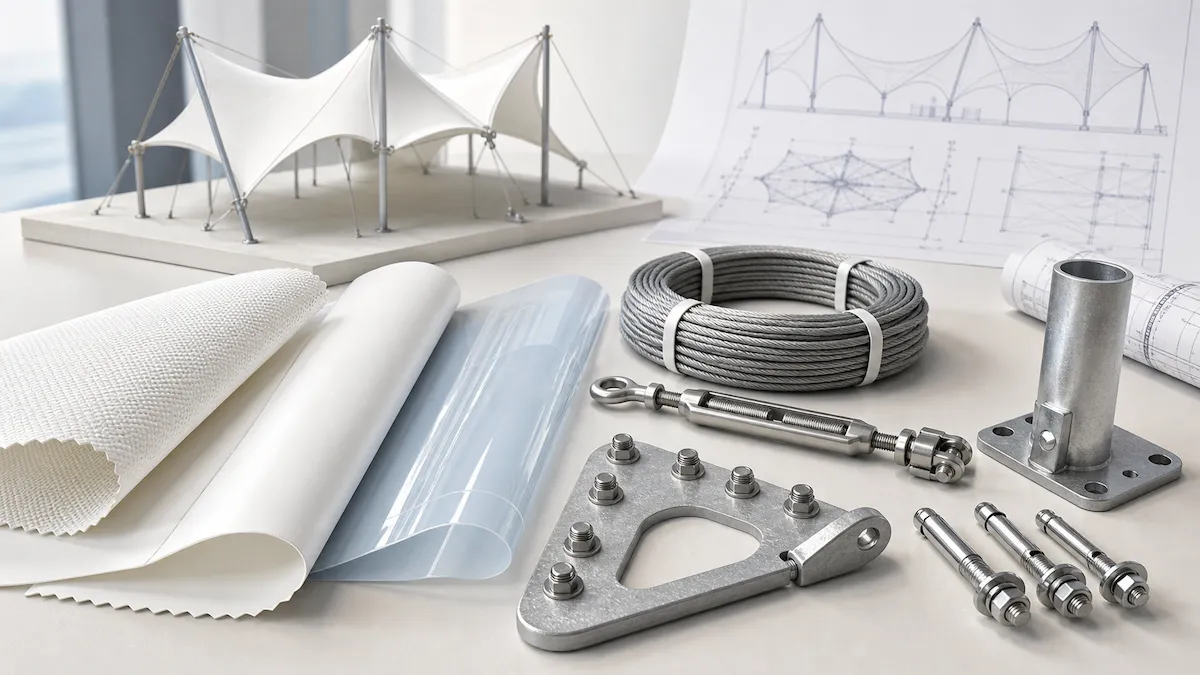
The performance of any tensile structure depends heavily on the materials used in its fabric membrane, steel framework, cables, fittings and anchoring system. Whether the project is a car parking shade, entrance canopy, shade sail, walkway cover, atrium roof, gazebo, outdoor cafe canopy or large-span architectural tensile structure, the right material selection decides its durability, appearance, safety and long-term value.
Tensile structures look simple from outside, but they are engineered systems. The membrane must resist sun, rain, wind and tension. The steel framework must carry load safely. Cables and fittings must hold the fabric in position. Surface coatings must protect against corrosion and weathering. When these materials work together correctly, the structure performs better and lasts longer.
Good tensile structure design starts with good material selection. Fabric, steel, cables, coatings and anchors must be chosen according to site exposure, span, wind load, usage, budget and maintenance requirement.
At ShadeCo India Private Limited, every project is planned with material suitability in mind. This guide explains the key materials used in tensile structures and how they affect popular shade solutions such as car parking sheds, entrance canopies, commercial shade structures and architectural fabric roofs.
Why Material Selection Matters in Tensile Structures
Material selection is not only about choosing a fabric color or frame finish. It affects load capacity, weather protection, UV resistance, fire performance, translucency, drainage, corrosion resistance and maintenance cost. A material that works for a small shade sail may not be suitable for a large-span parking shade or hospital atrium roof.
- Strength: The membrane and supporting frame must handle wind, rain and tension forces.
- Durability: Materials should perform well under outdoor exposure and regular use.
- Weather resistance: Fabric and steel should resist UV, moisture, heat and corrosion.
- Maintenance: Easy-to-clean materials reduce long-term upkeep.
- Appearance: Color, translucency and finish influence the final architectural look.
- Cost efficiency: The right material balances budget with performance and service life.
For permanent outdoor structures, material selection should always be matched with site conditions. A coastal location, industrial campus, school entrance, resort canopy and commercial parking area may each need a different fabric and steel protection strategy.
PVC-Coated Polyester Fabric
PVC-coated polyester fabric is one of the most commonly used membrane materials for tensile structures. It is practical, flexible and cost-effective, making it popular for car parking shades, entrance canopies, walkway covers, awnings, shade sails and many commercial shade structures.
- Flexible and lightweight: Suitable for curved forms and tensioned fabric designs.
- Cost-effective: A practical option for budget-conscious projects.
- Weather resistant: Provides protection against sun, rain and general outdoor exposure.
- Available in multiple colors: Helps match the structure with building design or brand identity.
- Suitable for common shade applications: Works well for parking sheds, canopies, walkways and outdoor seating covers.
PVC fabric is often selected for projects where functionality, budget and faster execution are important. With proper slope, tensioning and maintenance, it can deliver reliable performance in many Indian outdoor conditions.
PTFE-Coated Fiberglass Fabric
PTFE-coated fiberglass fabric is a premium membrane option used for long-life architectural tensile structures and large-span projects. It is known for durability, fire resistance, UV stability and strong performance in demanding conditions.
- Long service life: Suitable for permanent and high-value architectural structures.
- Excellent fire resistance: Useful for public and commercial spaces where safety is important.
- Strong UV stability: Helps maintain performance under sunlight exposure.
- Premium appearance: Gives a refined look to landmark projects and large canopies.
- Low maintenance surface: Easier to keep clean compared with many standard materials.
PTFE fabric is generally chosen for projects where long-term performance matters more than initial cost. It is suitable for stadium-style roofs, atrium covers, large entrance canopies, airports, public infrastructure and premium commercial projects.
ETFE Film for Lightweight Transparent Roofing
ETFE film is a lightweight translucent material used in advanced architectural roofing and facade applications. It is often selected where natural daylight, low structural weight and modern appearance are important.
- High light transmission: Allows daylight into covered spaces.
- Very lightweight: Reduces load on the supporting structure.
- Modern architectural look: Suitable for atriums, skylights and iconic projects.
- Weather resistant: Performs well in selected outdoor applications.
- Can be used in cushion systems: Useful for special architectural roofing designs.
ETFE is not required for every shade project, but it can be a strong choice for high-performance daylight roofing. For standard car parking shade or walkway cover projects, PVC or PTFE membranes may be more practical depending on budget and usage.
Silicone-Coated Glass Fabric
Silicone-coated glass fabric is used in selected tensile architecture applications where fire resistance, thermal stability and durability are important. It combines glass fiber strength with silicone coating flexibility.
- Good thermal stability: Suitable for projects with higher heat exposure.
- Fire resistance: Useful in safety-focused applications.
- Weather durability: Performs well under outdoor conditions when selected correctly.
- Architectural use: Suitable for special facade and canopy applications.
This material is generally used where project specifications require its particular performance benefits. It is important to compare it with PTFE, PVC and ETFE based on design life, cost and application.
Steel Framework for Tensile Structures
Steel is the main support material for most permanent tensile structures. It is used for columns, masts, arches, beams, brackets, base plates and support frames. The framework carries load from the membrane and transfers it safely to the foundation or supporting structure.
- Mild steel: Commonly used for cost-effective and strong structural frames.
- Galvanized steel: Recommended for better corrosion resistance in outdoor environments.
- Stainless steel: Used for selected fittings, exposed hardware and corrosion-sensitive areas.
- Painted or powder-coated steel: Improves appearance and adds surface protection.
- Hot-dip galvanized steel: Suitable for demanding outdoor and long-life applications.
For car parking shade structures, industrial parking sheds and school entrance canopies, steel framework design should consider vehicle clearance, column position, wind load, foundation strength and maintenance access. Learn more about our structural engineering services.
Steel Cables, Turnbuckles and Fittings
Cables and fittings are essential in tensile structures because they help maintain membrane shape and tension. They also transfer forces from fabric edges to steel supports and anchors.
- Edge cables: Maintain fabric boundary shape and distribute tension.
- Turnbuckles: Allow adjustment and fine-tuning of tension during installation.
- Clamps and plates: Secure fabric edges and connection points.
- Anchor bolts: Fix base plates and supports to civil foundations.
- Stainless fittings: Improve corrosion resistance for exposed connection details.
High-quality fittings reduce the risk of loose tension, uneven fabric pull and premature wear. They are small components, but they play a major role in long-term structural stability.
Anchoring and Foundation Materials
The anchoring system is where the tensile structure connects to the ground or existing building. It must resist uplift, lateral loads and forces created by membrane tension and wind movement.
- Reinforced concrete foundations: Common for permanent tensile structures and parking shades.
- Steel base plates: Connect columns and masts to foundations.
- Anchor bolts: Secure the base plate and transfer forces safely.
- Chemical anchors: Used in selected retrofit or existing structure conditions.
- Ground screws: Used in some temporary or lightweight applications.
A lightweight fabric roof can still create strong uplift forces during wind. That is why foundation and anchoring should never be treated as secondary details.
Coatings and Surface Protection
Coatings improve durability, cleanliness and weather resistance. Both fabric membranes and steel structures may require special surface treatments depending on the site environment.
- PVDF topcoat: Helps improve dirt resistance and cleanability on selected PVC fabrics.
- Fire-retardant treatment: Important for public, commercial and institutional projects.
- Anti-corrosion paint: Protects steel members from moisture and weather exposure.
- Powder coating: Provides a clean finish and surface protection for steel components.
- Galvanizing: Adds stronger corrosion protection for outdoor steel frames.
For coastal, industrial or high-rainfall locations, coating selection becomes even more important. A good finish protects the structure and reduces future maintenance costs.
Best Materials for Car Parking Shades
Car parking shade structures are among the most in-demand tensile applications. They must protect vehicles from sunlight, rain and outdoor exposure while keeping the layout practical and durable.
- Fabric: PVC-coated polyester is commonly used for economical and effective car parking shades.
- Framework: Mild steel or galvanized steel is used depending on durability needs and budget.
- Fittings: Cables, clamps, plates and anchor bolts must be designed for outdoor use.
- Finish: Painted, powder-coated or galvanized finish improves appearance and life.
- Design: Cantilever, arch and modular parking shade designs are commonly used.
For factories, schools, hospitals, hotels, offices and housing societies, a well-designed tensile car parking shade improves vehicle protection and site appearance. You can view similar completed works in our project portfolio.
How to Choose the Right Material
The best material is not always the most expensive one. It is the material that matches the structure’s purpose, location, design life and budget. Before selecting fabric or steel, evaluate the following factors:
- Project type: Parking shade, entrance canopy, shade sail, atrium roof, walkway cover or gazebo.
- Expected life: Temporary, semi-permanent or permanent structure.
- Weather exposure: Sun, rain, wind, dust, coastal moisture or industrial pollution.
- Fire safety: Important for public and institutional spaces.
- Visual requirement: Color, translucency, architectural style and surface finish.
- Maintenance access: Cleaning, inspection and future repair feasibility.
- Budget: Initial cost must be balanced with service life and maintenance.
A professional design team can help compare material options and recommend the most suitable combination. For complete execution support, explore our installation services.
Maintenance and Material Life
Even good materials need proper maintenance. Periodic cleaning, drainage inspection, cable tension review, fitting checks and steel coating inspection help extend the life of tensile structures.
Dust, leaves, bird droppings, water ponding and corrosion should be addressed early. Timely maintenance keeps the structure safe, clean and visually attractive. Learn more about our cleaning and maintenance services.
Conclusion: Materials Decide Performance
The success of any tensile structure depends on the correct combination of membrane fabric, steel framework, cables, fittings, anchors and protective coatings. A car parking shade, entrance canopy, walkway cover, shade sail or large-span fabric roof will perform better when the materials are selected according to site conditions and project use.
If you are planning a tensile structure project and need help choosing the right fabric, steel finish and structure type, contact ShadeCo India for design guidance, quotation and project support.