
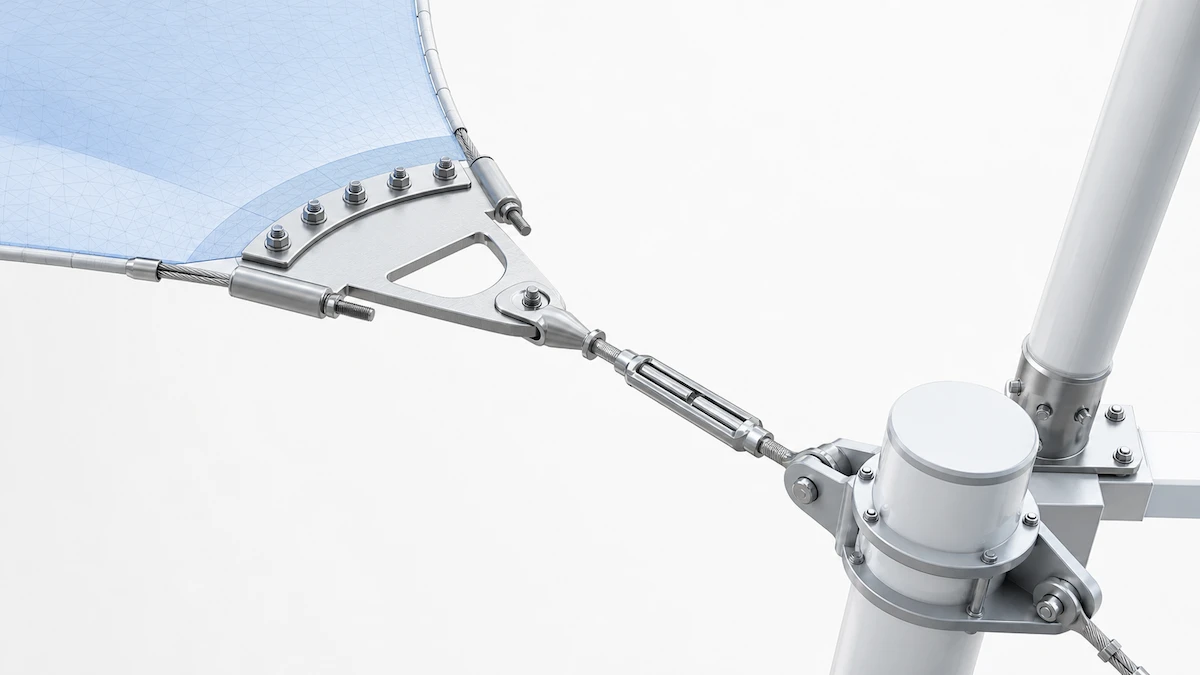
Tensile fabric structures are one of the most practical and visually impressive solutions in modern shade architecture. They use a tensioned fabric membrane, steel or aluminum framework, cables, anchors and engineered fittings to create lightweight yet strong covered spaces for commercial, institutional, industrial, hospitality and public infrastructure projects.
These structures are also known as tension membrane structures, tensile membrane structures or architectural fabric structures. Their main strength lies in the way the membrane and support system work together under controlled tension, allowing large spans, elegant forms and efficient use of materials.
A successful tensile fabric structure depends on more than just fabric. Membrane quality, steel framework, cable fittings, anchoring, drainage, wind-load design and installation accuracy all work together to decide the final performance and life of the structure.
At ShadeCo India Private Limited, tensile fabric structures are designed according to site use, architectural requirement, safety needs, weather exposure and long-term maintenance. This guide explains the most important details you should understand before planning a tensile fabric structure project.
What Are Tensile Fabric Structures?
Tensile fabric structures are lightweight architectural systems where a flexible membrane is stretched and tensioned over a supporting frame. The membrane is held in place using steel masts, arches, cables, clamps, edge plates, anchors and connection fittings.
Unlike traditional roofs that rely heavily on rigid and heavy materials, tensile fabric structures use shape, tension and load distribution to achieve stability. This makes them suitable for wide covered areas such as entrance canopies, car parking shades, walkway covers, atrium roofs, resort gazebos, outdoor cafes and sports facilities.
You can explore real examples of completed work on our ShadeCo project portfolio.
How Tensile Fabric Structures Work
A tensile fabric structure works by placing the membrane under controlled tension. The fabric is stretched across a designed geometry and connected to the supporting framework. This tension prevents sagging, improves stability and helps the structure resist environmental loads such as wind and rain.
The steel or aluminum framework provides the primary support, while cables, turnbuckles, clamps and anchors transfer load between the fabric and structure. Correct tensioning is important because loose fabric can collect water, flap in wind or wear faster over time.
- Fabric membrane: Provides shade, weather protection and architectural form.
- Steel or aluminum framework: Supports the membrane and transfers loads to foundations or existing structures.
- Cables and turnbuckles: Help tension the membrane and maintain shape.
- Corner plates and clamps: Secure the fabric edges and distribute force safely.
- Anchors and foundations: Provide stability and resistance against uplift and lateral loads.
Key Components of a Tensile Fabric Structure
Every tensile structure is a system of multiple components. The quality of each component affects the final durability, safety and appearance of the project.
- Membrane Fabric: Usually made from PVC-coated polyester, PTFE-coated fiberglass or other architectural membrane materials depending on project requirements.
- Support Framework: Mild steel, galvanized steel, stainless steel or aluminum framework designed according to span, shape, wind load and site conditions.
- Edge Cables: Used along fabric edges to maintain shape and transfer tension forces.
- Turnbuckles and Tensioners: Adjustable fittings used to apply and fine-tune membrane tension during installation.
- Clamps and Plates: Bolted hardware that connects fabric, cables and steel members securely.
- Masts and Columns: Vertical or inclined supports that define height, shape and load path of the structure.
- Anchoring System: Base plates, anchor bolts and foundations that hold the structure safely in place.
Types of Tensile Fabric Structures
Tensile fabric structures can be designed in different forms depending on space, purpose, aesthetics and engineering requirements.
- Conical Tensile Structures: Commonly used for entrances, courtyards, atriums, resorts and public spaces where a high central point creates a strong architectural form.
- Barrel Vault Structures: Suitable for walkways, parking shades, corridors and long-span covered passages.
- Hypar Structures: Hyperbolic forms that provide double curvature, visual appeal and efficient tension distribution.
- Cantilever Canopies: Supported from one side, ideal for entrances, drop-off zones, school gates and parking areas.
- Shade Sail Structures: Flexible fabric panels used for playgrounds, terraces, pool areas, cafes and outdoor seating.
- Custom Architectural Structures: Designed for unique buildings, landmark projects and special site requirements.
Materials Used in Tensile Fabric Structures
The right material selection improves lifespan, weather performance, appearance and maintenance requirements. Material choice should be based on location, usage, budget, structure size and exposure conditions.
- PVC-Coated Polyester Fabric: A widely used membrane for canopies, parking shades, walkways and commercial shade structures because it is flexible, durable and cost-effective.
- PTFE-Coated Fiberglass Fabric: A premium membrane known for long life, fire resistance, UV stability and strong architectural performance.
- ETFE Film: Lightweight and translucent, often used in advanced architectural applications where daylight transmission is important.
- Mild Steel Framework: Commonly used for durable and cost-effective permanent structures, usually finished with paint, powder coating or galvanizing.
- Galvanized Steel: Offers better corrosion resistance and is suitable for outdoor and long-life applications.
- Stainless Steel Fittings: Used for cables, connectors and exposed hardware where corrosion resistance and clean appearance matter.
- Aluminum Framework: Lightweight and corrosion-resistant, often preferred for temporary or smaller structures.
Applications of Tensile Fabric Structures
Tensile fabric structures are highly versatile and can be used across many sectors. Their lightweight design and large-span capability make them suitable for both functional shade and architectural identity.
- Schools and Colleges: Entrance canopies, assembly covers, walkway roofs, playground shades and parking areas.
- Hospitals: Atrium roofs, drop-off canopies, entrance covers and shaded waiting areas.
- Commercial Buildings: Mall canopies, retail walkways, outdoor cafes and atrium covers.
- Industrial Facilities: Vehicle parking shades, worker rest areas, loading covers and factory campus structures.
- Hotels and Resorts: Poolside shades, gazebos, outdoor dining covers and landscape structures.
- Public Infrastructure: Bus shelters, smart city structures, amphitheaters, public walkways and civic shade areas.
- Residential Projects: Terrace canopies, garden gazebos, car parking shades and outdoor seating areas.
Advantages of Tensile Fabric Structures
Tensile fabric structures are preferred because they offer a practical combination of performance, speed, design freedom and long-term value.
- Lightweight Design: Reduces structural load compared with many conventional roofing systems.
- Large Span Capability: Covers wide spaces with fewer intermediate supports.
- Modern Appearance: Adds a clean architectural identity to commercial, institutional and public spaces.
- Quick Installation: Prefabricated steel and membrane components help reduce on-site execution time.
- Weather Protection: Provides shade, UV protection and rain protection when designed properly.
- Custom Shape Options: Can be designed as conical, barrel vault, hypar, cantilever, arch or custom forms.
- Lower Maintenance: Requires periodic cleaning and inspection rather than heavy routine maintenance.
Are Tensile Fabric Structures Affordable?
Tensile fabric structures can be cost-effective because they use lightweight materials, efficient structural systems and prefabricated components. However, the final cost depends on span, design complexity, fabric type, steel weight, foundation requirement, site location, installation conditions and finishing quality.
A simple parking shade or walkway cover may be more economical than a complex architectural atrium roof. For accurate pricing, the project must be evaluated with site details, dimensions and design expectations.
Are Tensile Fabric Structures Sustainable?
Tensile fabric structures can support sustainable construction goals because they use less material than many conventional roofing systems and can allow filtered daylight into covered areas. Their lightweight design may reduce foundation requirements, while durable membranes can provide long service life with proper maintenance.
- Reduced Material Use: Lightweight membranes and optimized steel support systems can reduce unnecessary material consumption.
- Natural Light: Translucent membranes can improve daylight in covered spaces.
- Long Service Life: Quality materials and maintenance planning improve lifecycle value.
- Lower Construction Impact: Prefabricated components can reduce site disturbance and installation time.
Steel or Aluminum Framework: Which Is Better?
Steel and aluminum both have advantages. The right choice depends on project size, permanence, budget, corrosion exposure and design requirements.
- Steel Framework: Better for permanent, large-span and heavy-duty tensile structures. It offers strength, durability and better load-carrying capacity.
- Aluminum Framework: Better for lightweight, temporary, portable or smaller structures where corrosion resistance and easy handling are priorities.
For most permanent outdoor shade projects, steel framework with suitable protective coating is a practical choice. For technical support, you can review our structural engineering services.
Important Design Considerations
A tensile fabric structure should be planned carefully because small design mistakes can affect performance. Before finalizing the design, consider these important points:
- Wind Load: The structure must be designed according to local wind conditions and site exposure.
- Drainage: Proper slope and water flow prevent ponding on the membrane.
- Membrane Tension: Correct tensioning improves shape, safety and long-term performance.
- Foundation Strength: Anchors and foundations must resist uplift and lateral forces.
- Fabric Selection: Fabric type should match usage, budget, fire rating, UV exposure and design life.
- Maintenance Access: The structure should allow cleaning, inspection and future repair where needed.
ShadeCo provides complete support from design to installation. Learn more about our installation services and cleaning and maintenance services.
Maintenance of Tensile Fabric Structures
Although tensile fabric structures are generally low maintenance, periodic inspection is important. Fabric surfaces should be cleaned, drainage areas should be checked, fasteners and fittings should be inspected, and steel coatings should be reviewed for corrosion or damage.
After heavy rain, strong wind or unusual site activity, a quick inspection can help identify tension loss, loose fittings, fabric damage or water accumulation before it becomes a bigger issue.
Frequently Asked Questions
- What materials are used in tensile fabric structures? Common materials include PVC-coated polyester, PTFE-coated fiberglass, ETFE film, steel framework, cables, clamps and anchoring systems.
- How long do tensile fabric structures last? Service life depends on fabric type, steel treatment, site exposure and maintenance. Quality materials and proper installation can provide long-term performance.
- Are tensile fabric structures suitable for Indian weather? Yes, when designed with proper wind load, drainage, UV-resistant fabric, fire-retardant membrane and corrosion-protected framework.
- Can tensile fabric structures be customized? Yes, shape, size, fabric type, color, steel finish and support layout can be customized according to project requirements.
- Do they require regular maintenance? They require periodic cleaning and inspection to maintain appearance, fabric tension, drainage and structural safety.
Why Choose Tensile Fabric Structures?
Tensile fabric structures are ideal for projects that need lightweight construction, large-span coverage, modern appearance and reliable outdoor performance. They are suitable for schools, hospitals, commercial spaces, factories, resorts, public spaces and residences.
Whether you need an entrance canopy, parking shade, atrium roof, walkway cover, gazebo or custom architectural fabric structure, ShadeCo can help with design, fabrication and installation support.
To discuss your project requirement, contact ShadeCo India for a suitable tensile fabric structure solution.